
Category: Medical Billing
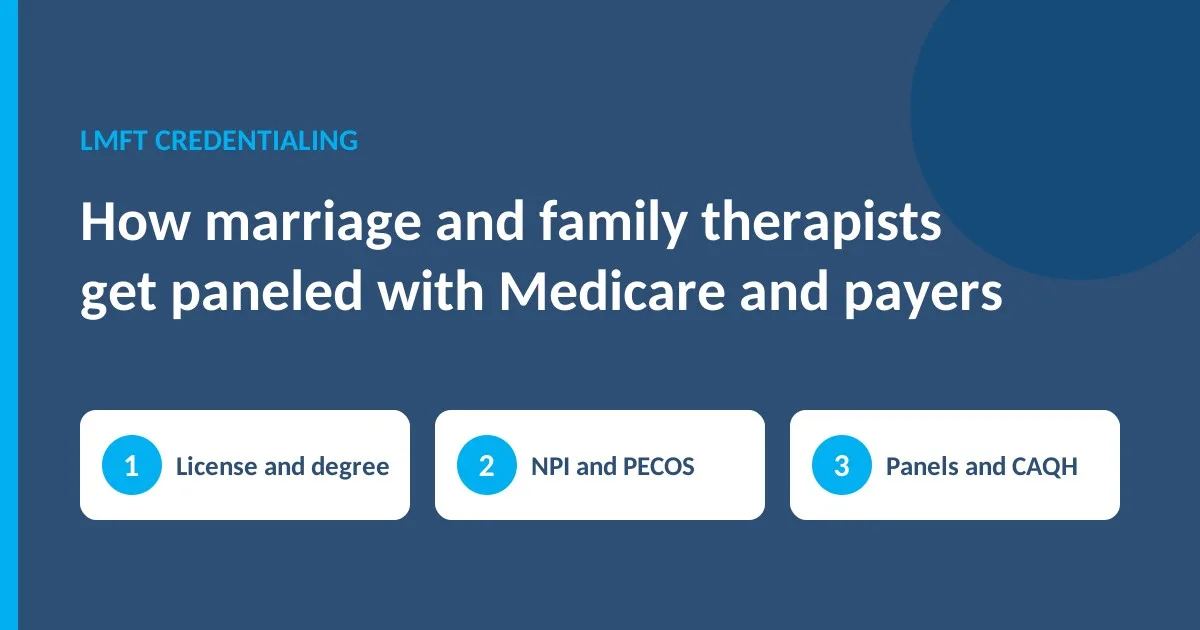
LMFT Credentialing for Medicare, Medicaid and Commercial Plans
LMFT credentialing is the process of getting a licensed marriage and family therapist approved by Medicare, Medicaid and commercial health plans so claims pay at in-network rates. Since January 1, 2024, marriage and family therapists (MFTs) can enroll in Medicare and bill it directly, which added a new track to every LMFT’s file. This guide […]
Read more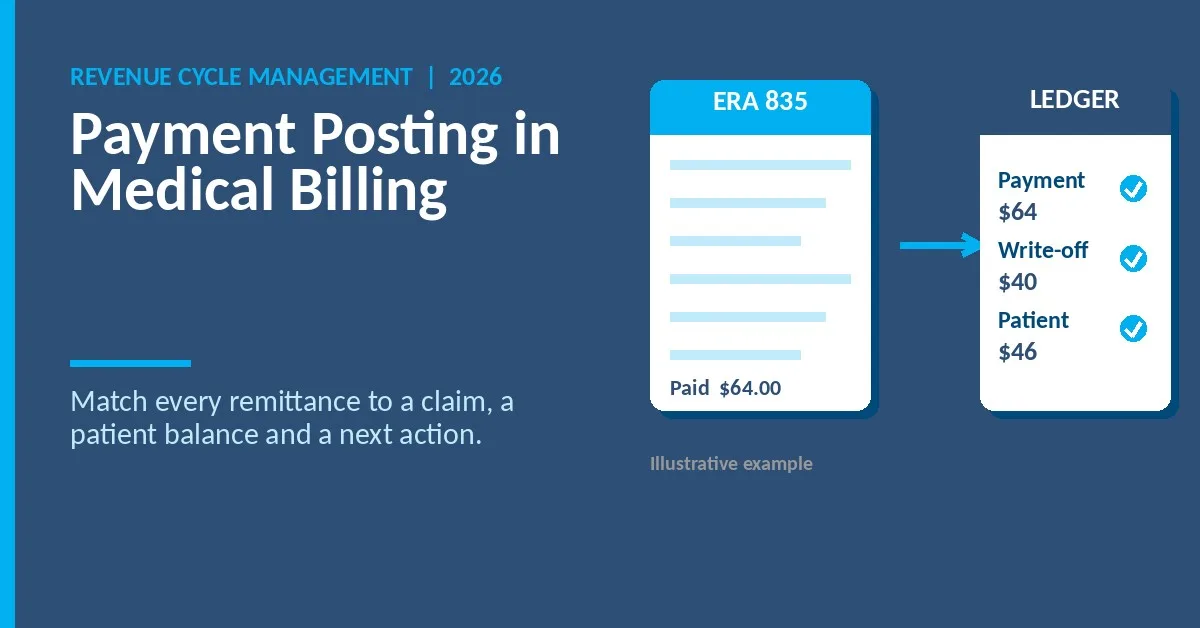
Payment Posting in Medical Billing: Steps, Adjustment Codes and Accuracy Targets for 2026
Payment posting in medical billing is the process of recording insurance and patient payments, contractual adjustments and denials against the correct claim and service line in the practice management system. Posting uses remittance advice to update balances, trigger patient billing and flag denials for follow-up, so accounts receivable reflects what is actually owed. Every dollar […]
Read more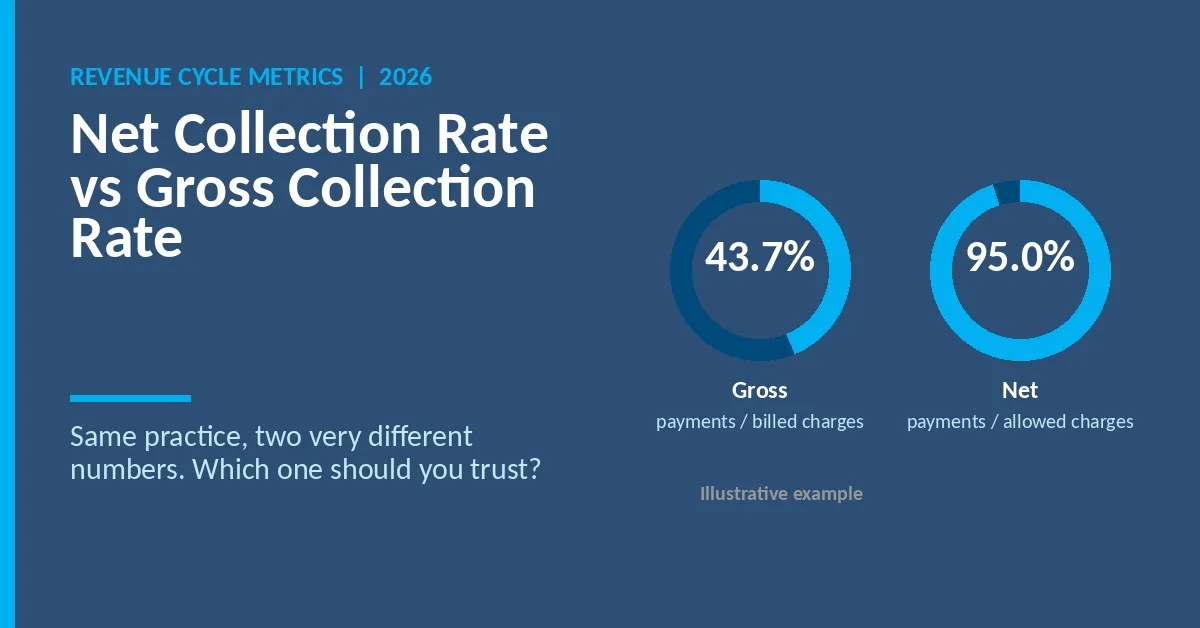
Net Collection Rate vs Gross Collection Rate: Formulas, Benchmarks and Which One to Trust
Net collection rate vs gross collection rate comes down to the denominator: gross collection rate divides payments by total billed charges, while net collection rate divides payments by charges minus contractual adjustments. Gross rate reflects fee schedule and contracts, and net rate shows how much collectible revenue a practice actually collected. A practice that collects […]
Read more
Medical Claim Scrubbing and Clean Claim Rate: How They Work Together in 2026
Medical claim scrubbing is the automated review of a claim against coding, payer and format rules before submission, and clean claim rate is the percentage of submitted claims that pass without rejection, denial or a request for more information. Scrubbing is the process; clean claim rate is the scorecard that shows whether the process works. […]
Read more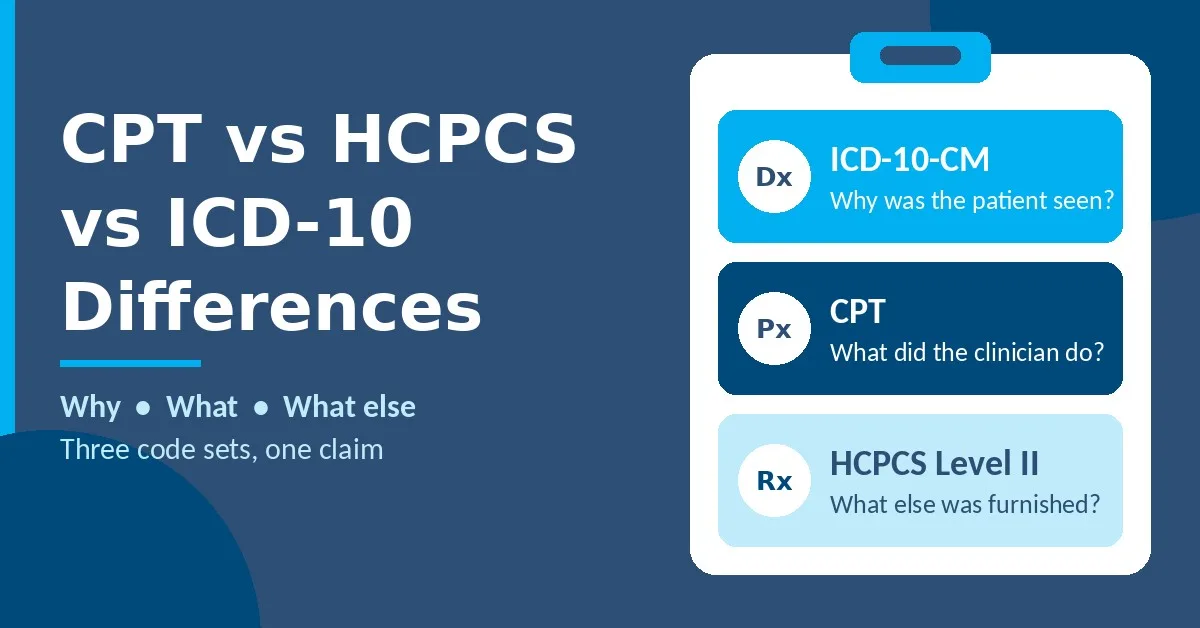
CPT vs HCPCS vs ICD-10 Differences: A Practical Guide for 2027 Claims
ICD-10-CM reports why a patient was seen, CPT reports what a clinician did, and HCPCS Level II reports drugs, supplies and services that CPT does not describe. A claim line pairs a diagnosis from ICD-10-CM with a procedure from CPT or HCPCS. Each code set has a different owner, format and update schedule. The CPT […]
Read more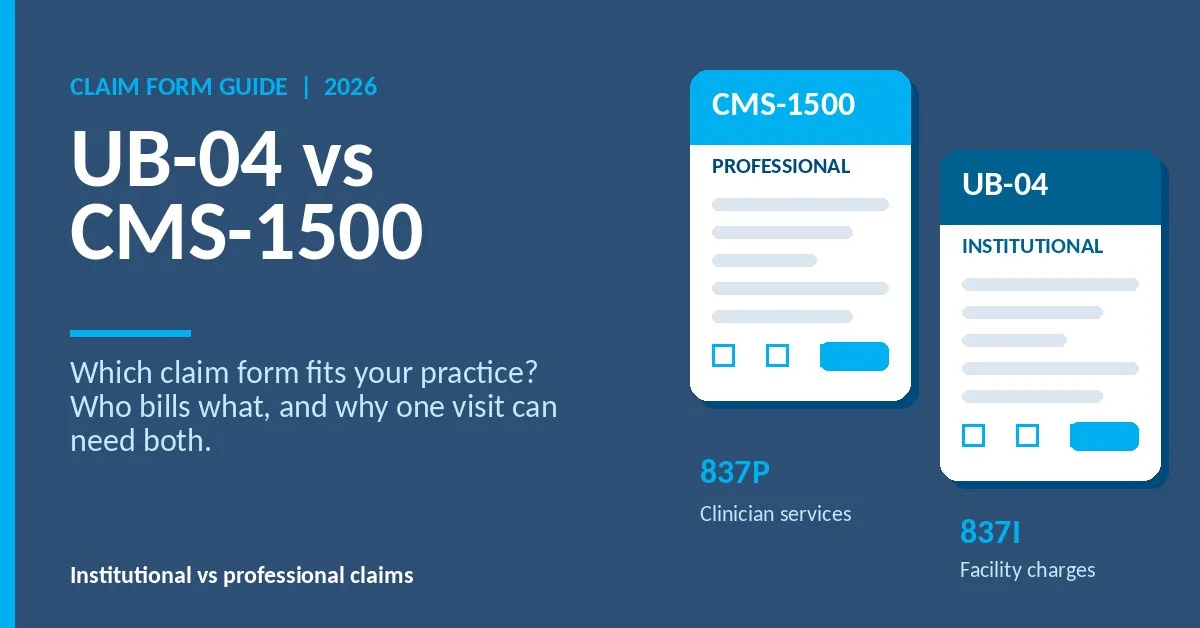
UB-04 vs CMS-1500: Which Claim Form Fits Your Practice in 2026?
The UB-04, also called the CMS-1450, is the institutional claim form that hospitals, nursing facilities and clinics such as rural health centers use to bill facility charges. The CMS-1500 is the professional claim form that physicians, practitioners and suppliers use to bill clinician services. Electronic claims mirror the split: 837I for institutional, 837P for professional. […]
Read more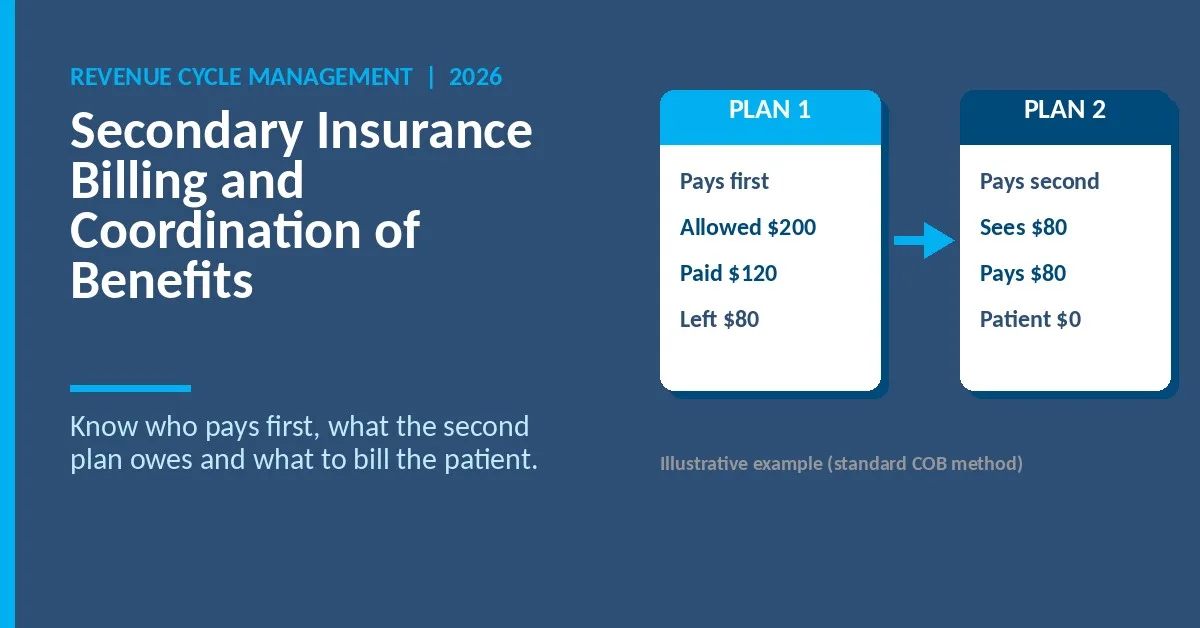
Secondary Insurance Billing and Coordination of Benefits: Who Pays First, How Much and What to Submit in 2026
Secondary insurance billing is the process of submitting the balance left after a primary payer pays to a patient’s second health plan. Coordination of benefits (COB) rules decide which plan pays first and cap combined payment, so the two plans together never pay more than the covered amount. Who pays first when a patient has […]
Read more
CO-29 Denial Code (Timely Filing): Deadlines, Proof and Prevention
The CO-29 denial code is a claim adjustment reason code (CARC 29) that tells a provider the payer received the claim after its filing deadline: “The time limit for filing has expired.” The CO group code puts the loss on the provider, so the balance cannot be shifted to the patient. Review note: filing limits […]
Read more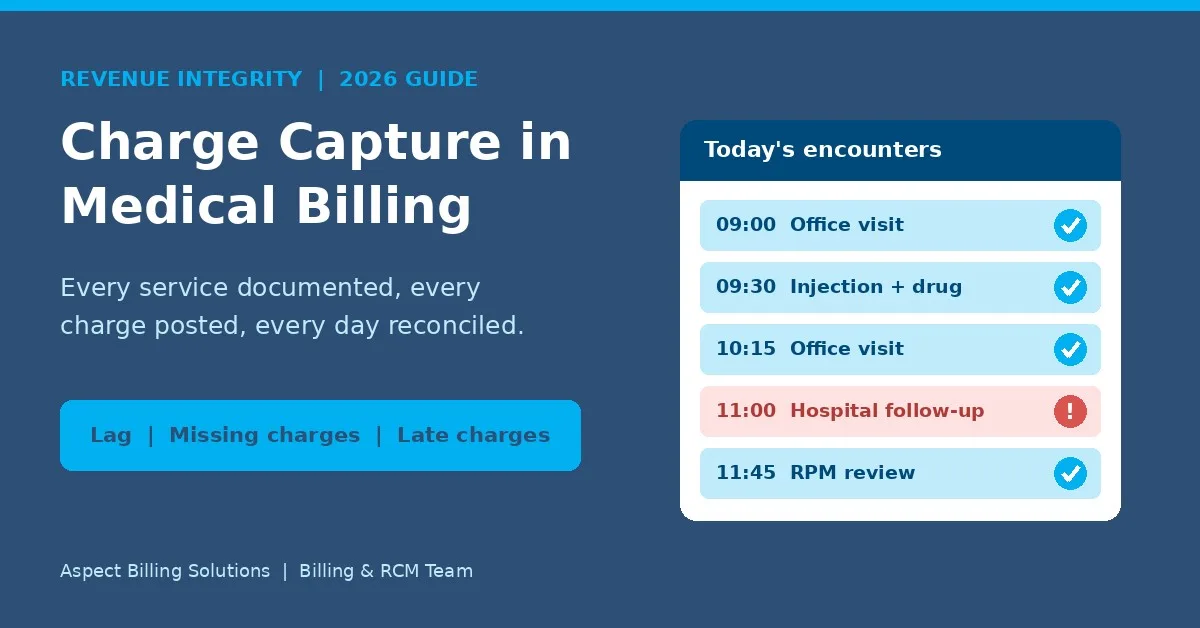
Charge Capture in Medical Billing: Process, Metrics and Fixes for 2026
Charge capture in medical billing is the revenue cycle process that records every billable service, procedure, drug and supply from a patient encounter as a charge, so it can be coded and billed. Practical targets commonly cited by HFMA include entering charges within 3 days of service and keeping missing charges under 1% of visits. […]
Read more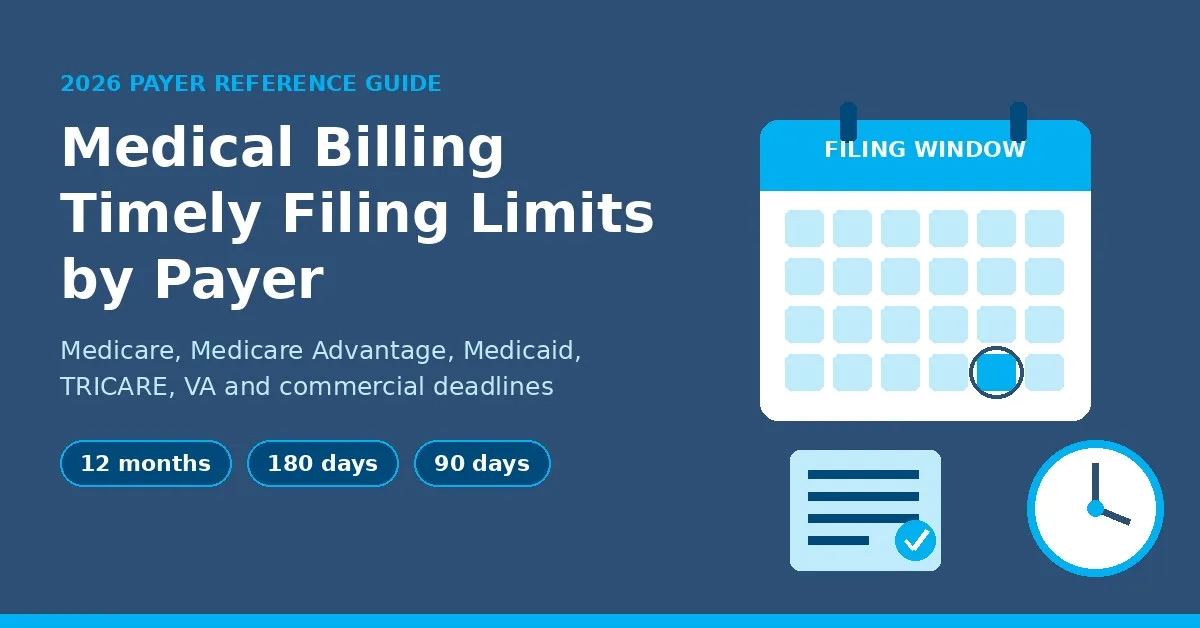
Medical Billing Timely Filing Limits by Payer: 2026 Reference Guide
Medical billing timely filing limits by payer are claim-submission deadlines that each insurer or government program sets, counted from the date of service. Original Medicare allows 12 months, Medicaid programs allow no more than 12 months, TRICARE allows one year, VA Community Care allows 180 days, and commercial contracts commonly allow 90 to 180 days. […]
Read more