
Category: Medical Billing & Coding
CPT 90785 Interactive Complexity: When to Add It
CPT 90785 interactive complexity is an add-on code that reports extra work when communication problems complicate a psychiatric visit. You add it to an eligible evaluation or psychotherapy code when at least one qualifying factor occurs and your note proves it. It is never billed alone. This guide covers the four factors, eligible codes, a […]
Read more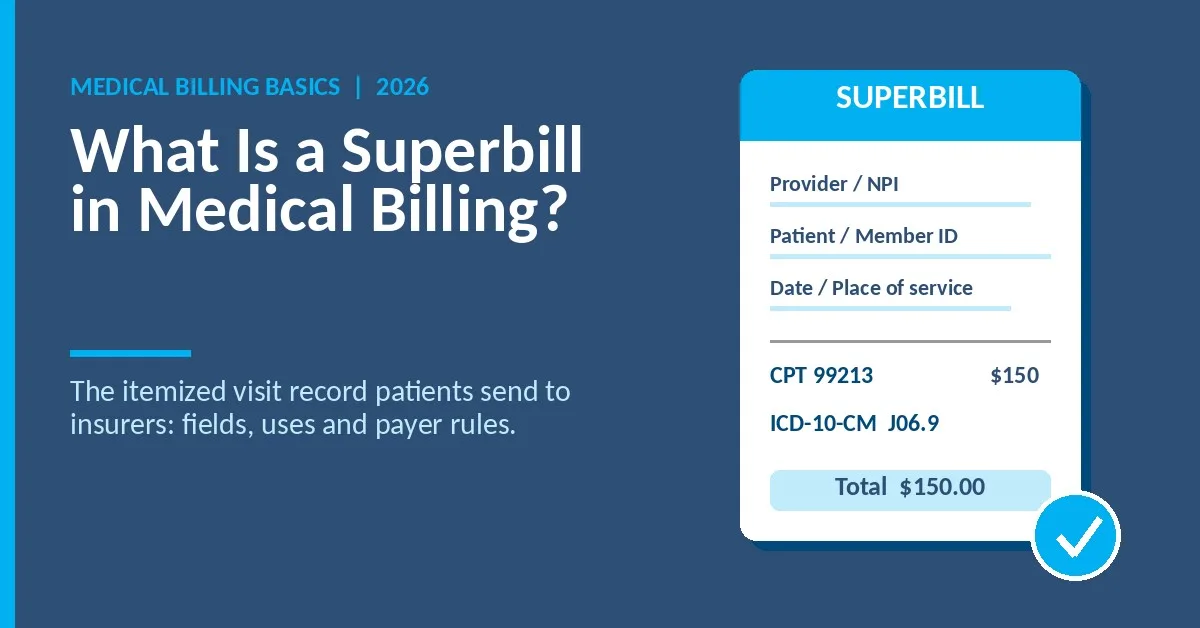
What Is a Superbill in Medical Billing? Fields, Uses and Rules for 2026
A superbill is an itemized visit summary listing provider and patient details, the date of service, CPT procedure codes, ICD-10-CM diagnosis codes and charges. Patients submit a superbill to an insurer to request reimbursement, usually for out-of-network care. A superbill is not a claim form, and practices do not send one to a payer in […]
Read more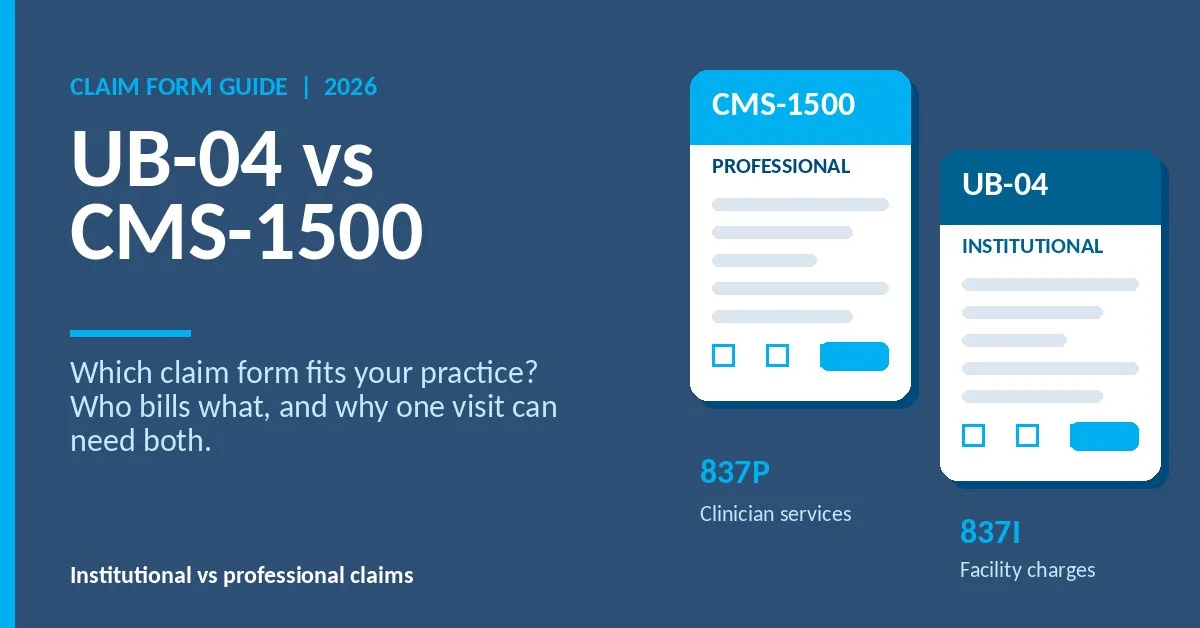
UB-04 vs CMS-1500: Which Claim Form Fits Your Practice in 2026?
The UB-04, also called the CMS-1450, is the institutional claim form that hospitals, nursing facilities and clinics such as rural health centers use to bill facility charges. The CMS-1500 is the professional claim form that physicians, practitioners and suppliers use to bill clinician services. Electronic claims mirror the split: 837I for institutional, 837P for professional. […]
Read more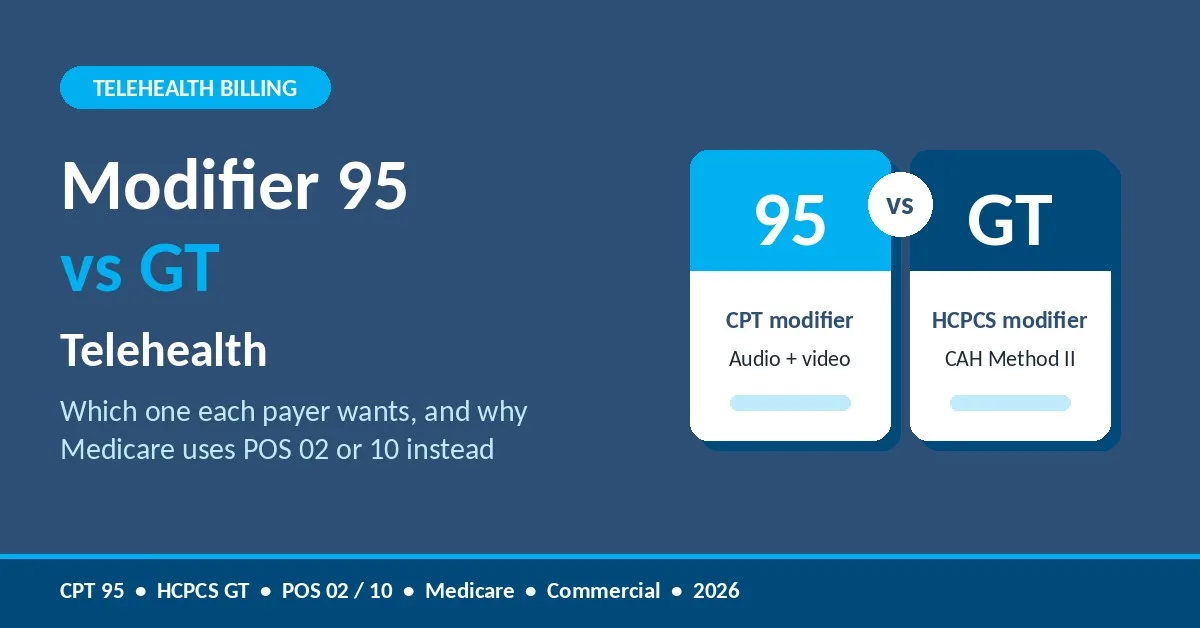
Modifier 95 vs GT Telehealth: Which One to Bill, and When Medicare Wants Neither
Modifier 95 vs GT telehealth: modifier 95 is the CPT modifier for a synchronous audio-video telehealth service, commonly required by commercial payers, while GT is an older HCPCS modifier that Medicare now requires only on critical access hospital Method II institutional claims. Medicare professional claims use place of service 02 or 10 instead. Modifier 95 […]
Read more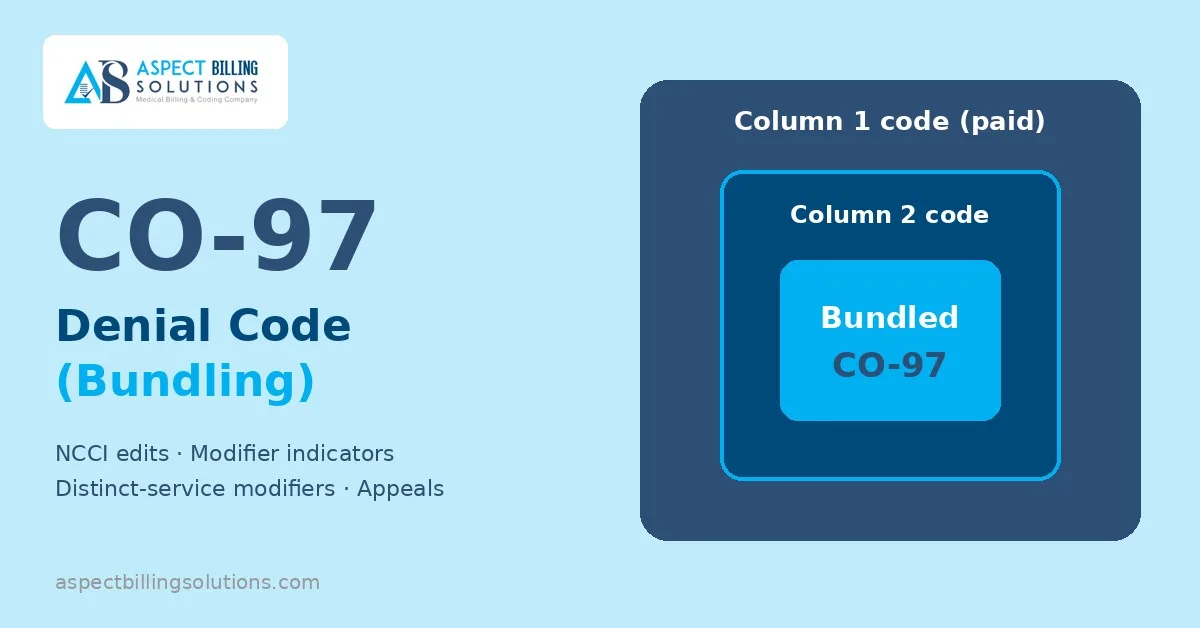
CO-97 Denial Code (Bundling): NCCI Edits and Fixes
CO-97 means the payer considers a service included in the payment for another service already adjudicated. It usually comes from NCCI bundling edits or the global surgical package. The provider cannot bill the patient, and keeping CO-97 under 10% of denials is an illustrative practical target, not a mandate. Bundling denials frustrate billing teams because […]
Read more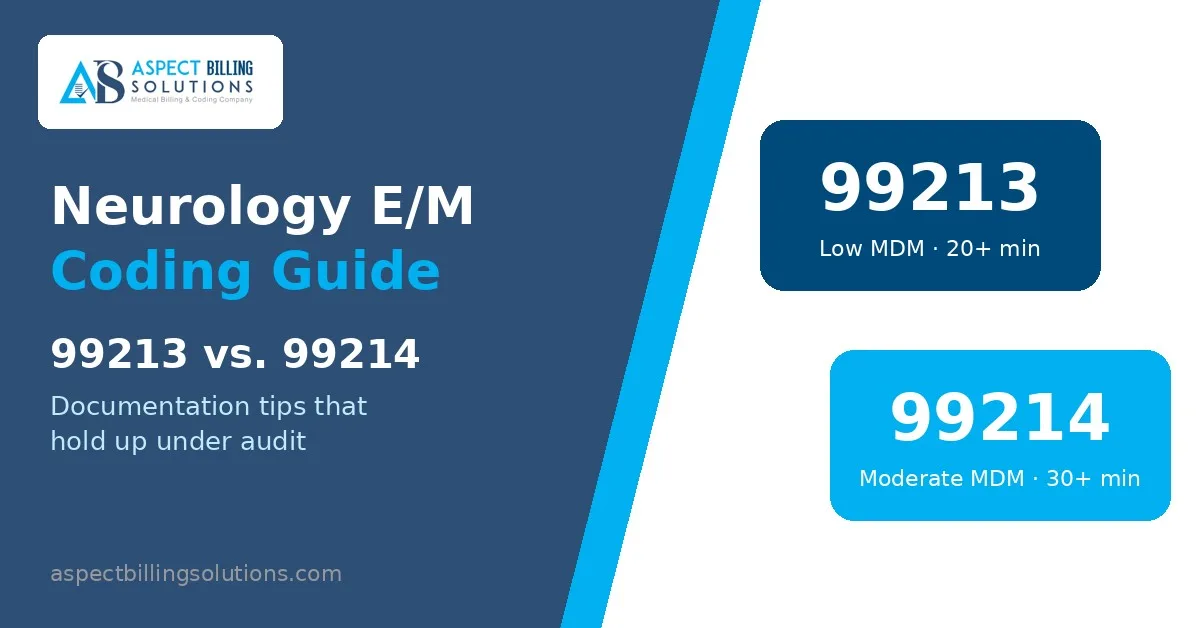
Neurology E/M Coding 99213 99214 Documentation Tips
For an established neurology patient, 99213 requires low medical decision making or at least 20 minutes of total time. 99214 requires moderate decision making or at least 30 minutes. Decision making is met when two of three elements reach the level billed: problems, data, and risk. Many practices aim for 95% or higher accuracy on […]
Read more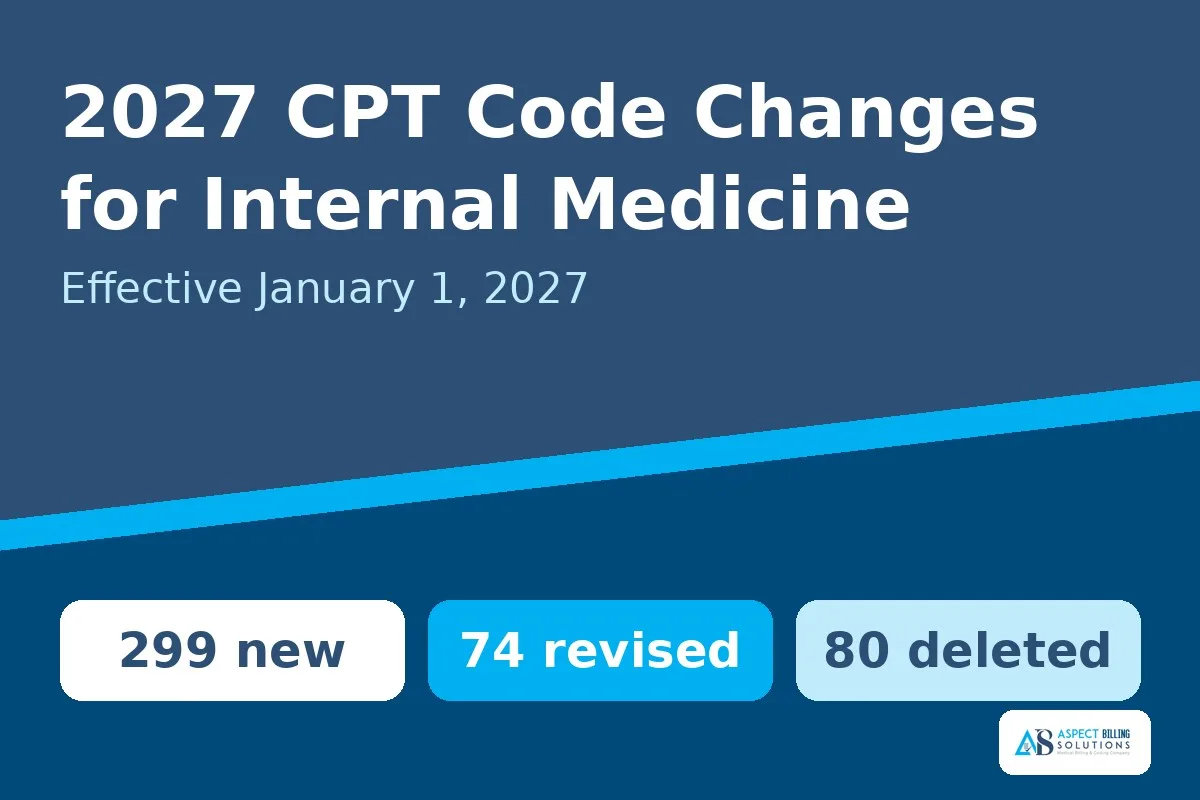
2027 CPT Code Changes for Internal Medicine Practices
The 2027 CPT code changes for internal medicine practices take effect January 1, 2027. The AMA reports 453 editorial changes [A], but few reach a general office directly: new sleep study codes, AI-related codes, and proposed Medicare payment shifts. Only the AMA figures are final; the CMS items are proposals. 2027 CPT Code Changes for […]
Read more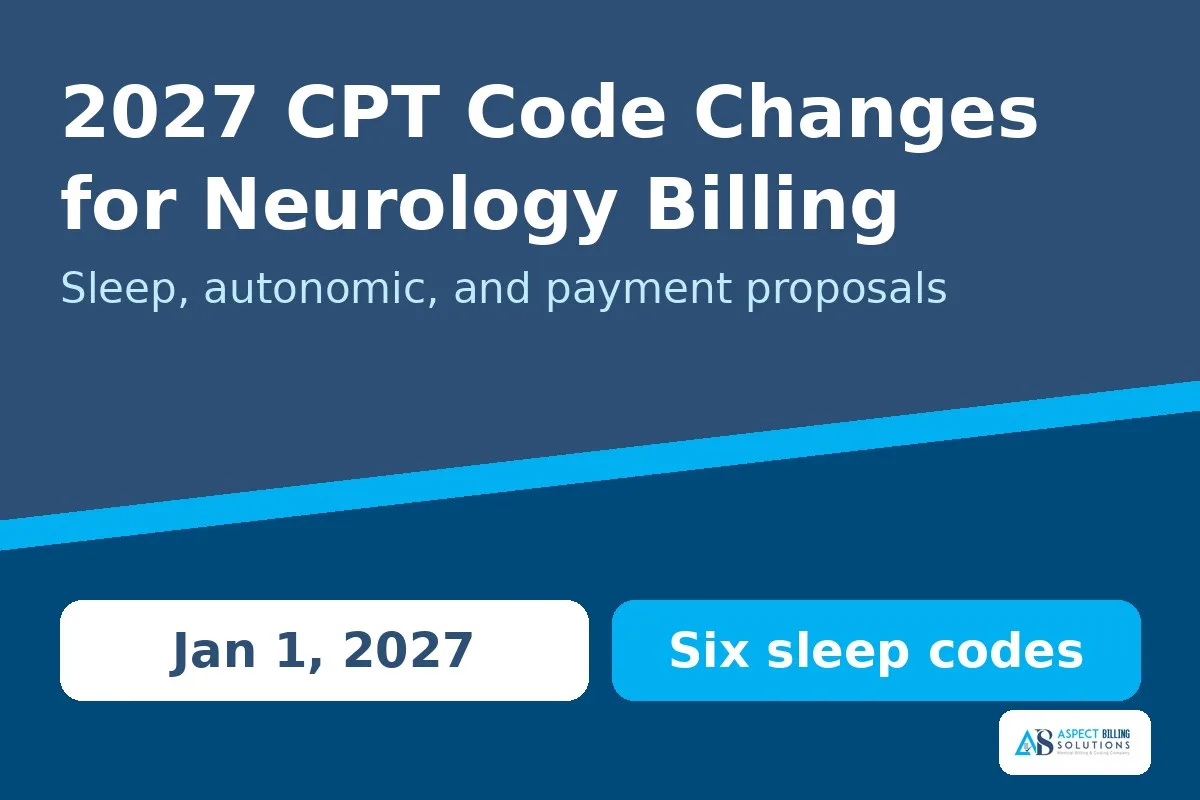
2027 CPT Code Changes Neurology Billing Guide
2027 CPT code changes neurology billing teams face begin January 1, 2027. Three areas touch neurology most: six new unattended sleep study codes, autonomic testing codes that CMS lists as new, and Medicare proposals that include a review of vagus nerve stimulator programming values. Only the AMA’s counts and effective date are final; the payment […]
Read more
Neuropsychological Testing Billing CPT 96132 96133 Guide
Neuropsychological testing billing (CPT 96132, 96133) covers the clinician’s evaluation work: data integration, interpretation, clinical decision-making, and the written report. CPT 96132 reports the first hour, and add-on code 96133 reports each additional hour. Test administration and scoring are billed separately under 96136 through 96139, and time thresholds decide how many units you may report. […]
Read more
Professional Neurology Billing Specialists in Pennsylvania
A professional neurology billing specialist is one whose expertise can actually be verified: coders and billers holding recognized credentials (CPC, CPB, or CPMA from AAPC), a tracked coding accuracy rate broken out by procedure type rather than one blended number, and a documented process for Pennsylvania-specific requirements — HealthChoices’ five-zone Medicaid structure, the state’s clean-claim […]
Read more