
Category: Denial Management
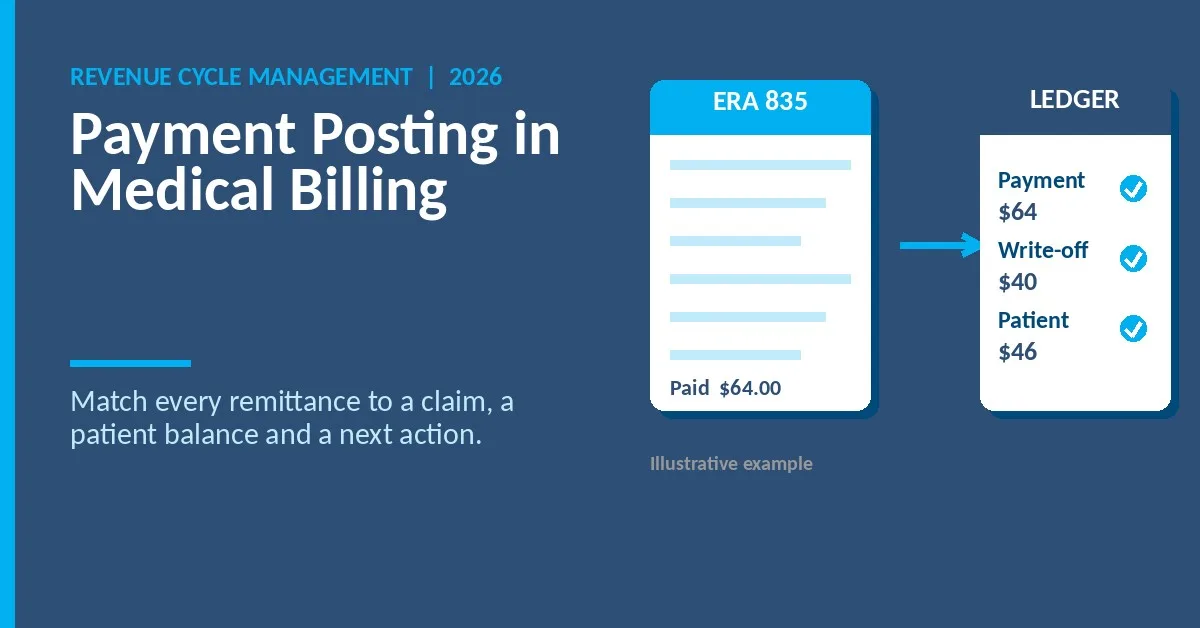
Payment Posting in Medical Billing: Steps, Adjustment Codes and Accuracy Targets for 2026
Payment posting in medical billing is the process of recording insurance and patient payments, contractual adjustments and denials against the correct claim and service line in the practice management system. Posting uses remittance advice to update balances, trigger patient billing and flag denials for follow-up, so accounts receivable reflects what is actually owed. Every dollar […]
Read more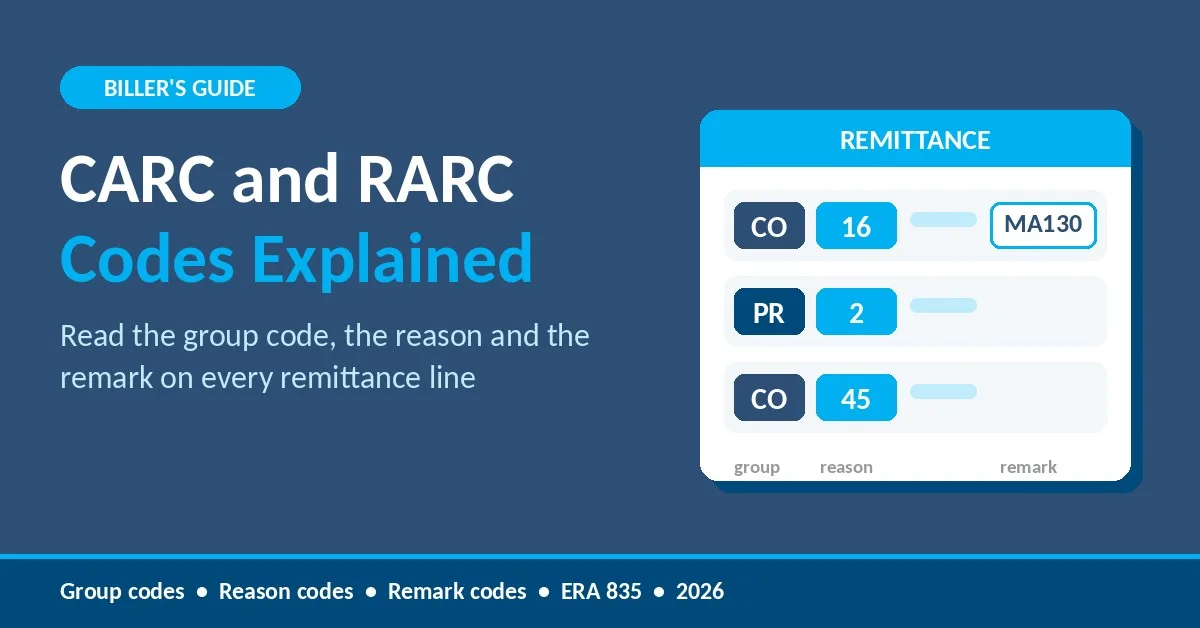
CARC and RARC Codes Explained: How to Read Every Line of a Remittance
CARC and RARC codes explained in one passage: a claim adjustment reason code (CARC) states why a payer paid less than the billed amount, and a remittance advice remark code (RARC) adds detail or a next step. Every CARC travels with a group code (CO, PR, OA or PI) that assigns financial responsibility on the […]
Read more
CO-29 Denial Code (Timely Filing): Deadlines, Proof and Prevention
The CO-29 denial code is a claim adjustment reason code (CARC 29) that tells a provider the payer received the claim after its filing deadline: “The time limit for filing has expired.” The CO group code puts the loss on the provider, so the balance cannot be shifted to the patient. Review note: filing limits […]
Read more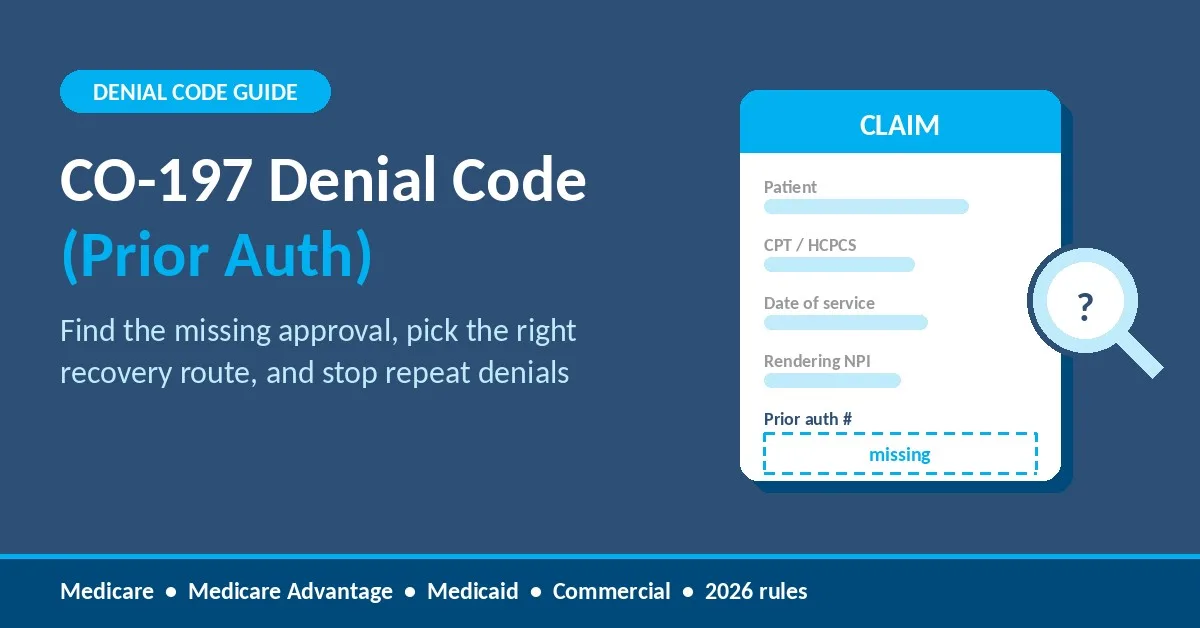
CO-197 Denial Code (Prior Auth): Causes, Recovery Routes and 2026 Payer Rules
The CO-197 denial code is a claim adjustment reason code (CARC 197) that tells a provider the payer found no required precertification, authorization, notification or pre-treatment approval for the billed service. Group code CO makes the provider responsible, so the practice must correct, obtain retro approval for, appeal or write off the claim. Review note: […]
Read more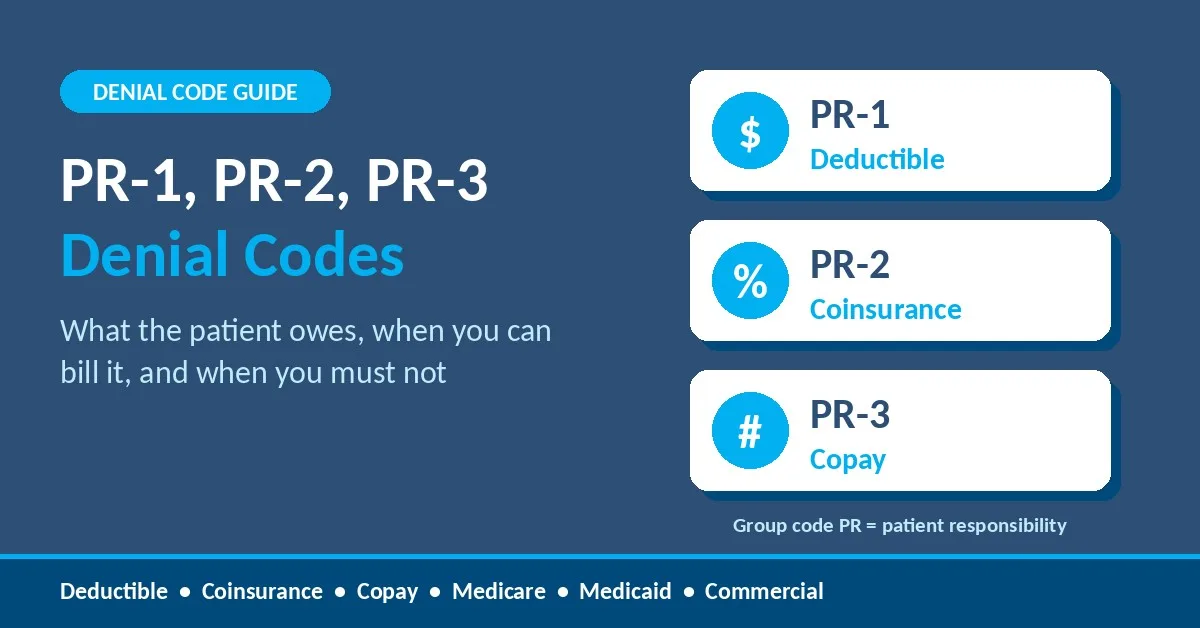
PR-1, PR-2, PR-3 Denial Codes: A Biller’s Guide to Deductible, Coinsurance and Copay Balances
PR-1, PR-2 and PR-3 denial codes are patient-responsibility adjustments: group code PR paired with claim adjustment reason codes 1 (deductible), 2 (coinsurance) and 3 (co-payment). They are not true denials. The payer processed the claim and assigned those dollars to the patient, which makes them billable only after a few checks. Review note: the Medicare […]
Read more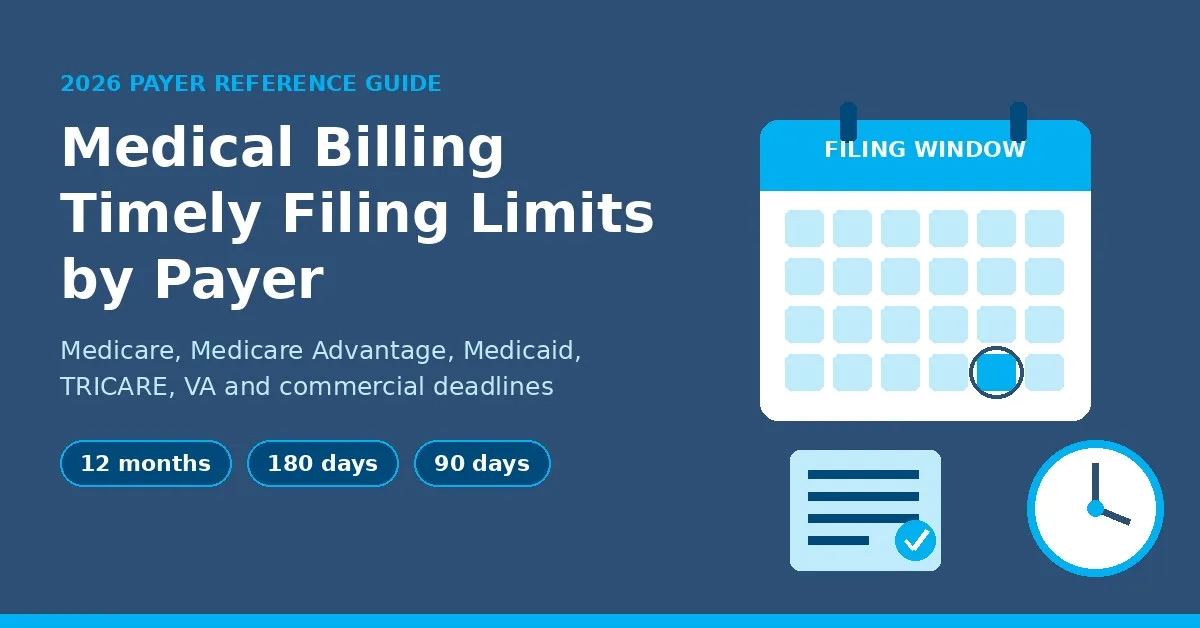
Medical Billing Timely Filing Limits by Payer: 2026 Reference Guide
Medical billing timely filing limits by payer are claim-submission deadlines that each insurer or government program sets, counted from the date of service. Original Medicare allows 12 months, Medicaid programs allow no more than 12 months, TRICARE allows one year, VA Community Care allows 180 days, and commercial contracts commonly allow 90 to 180 days. […]
Read more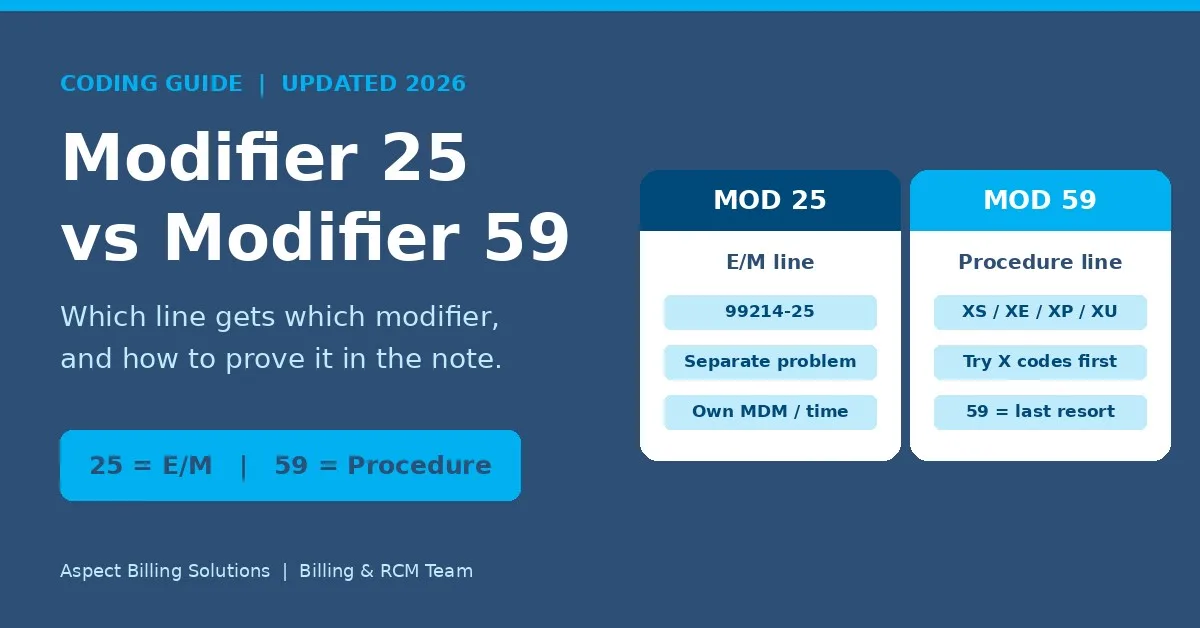
Modifier 25 vs Modifier 59: Which Line Gets Which Modifier (2026 Guide)
Modifier 25 vs modifier 59 comes down to code type. Modifier 25 is a CPT modifier that marks a significant, separately identifiable evaluation and management (E/M) service on the same day as a procedure. Modifier 59 is a CPT modifier that marks a non-E/M procedure as distinct from another same-day procedure that edits would otherwise […]
Read more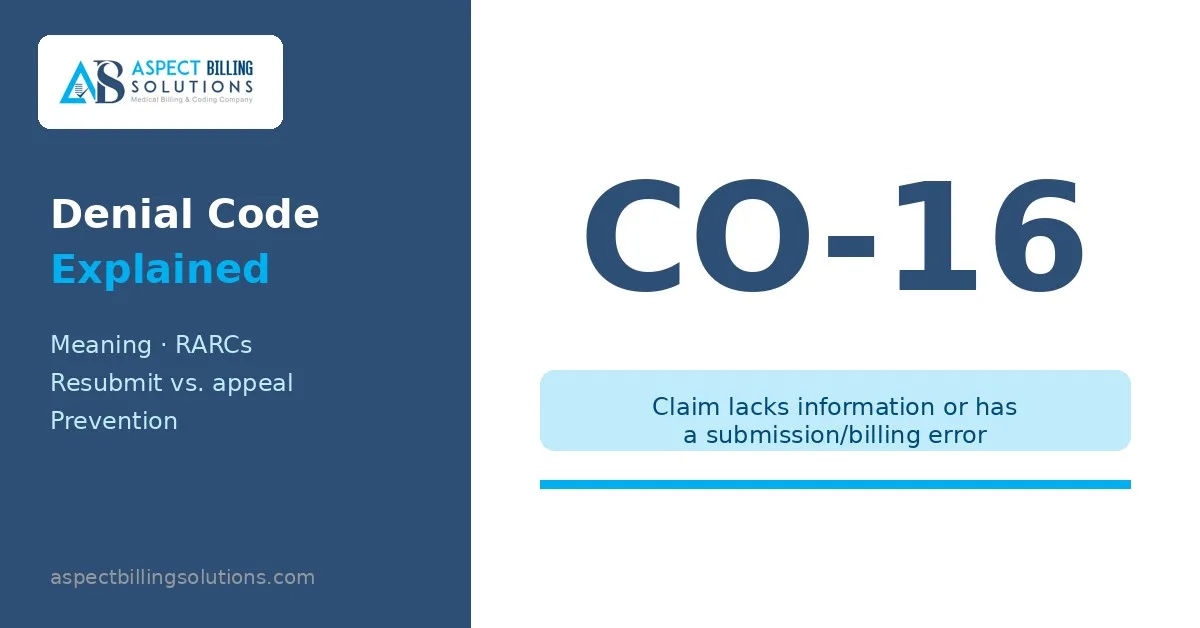
CO-16 Denial Code Explained: Causes, RARCs and Fixes
CO-16 means the claim lacks information or has a submission or billing error needed for adjudication. The “CO” group code makes the provider responsible, so the patient is not billed. A remark code identifies the exact problem. Keeping CO-16 under 10% of all denials is an illustrative practical target, not a mandate. CO-16 is one […]
Read more
CO-50 Denial Code (Medical Necessity): Causes & Fixes
CO-50 means the payer considers a service non-covered because it was not deemed medically necessary. The CO group code makes the provider liable unless a valid ABN shifts liability to the patient. Keeping CO-50 under 10% of all denials is an illustrative practical target, not a mandate. Medical necessity denials rank among the most expensive […]
Read more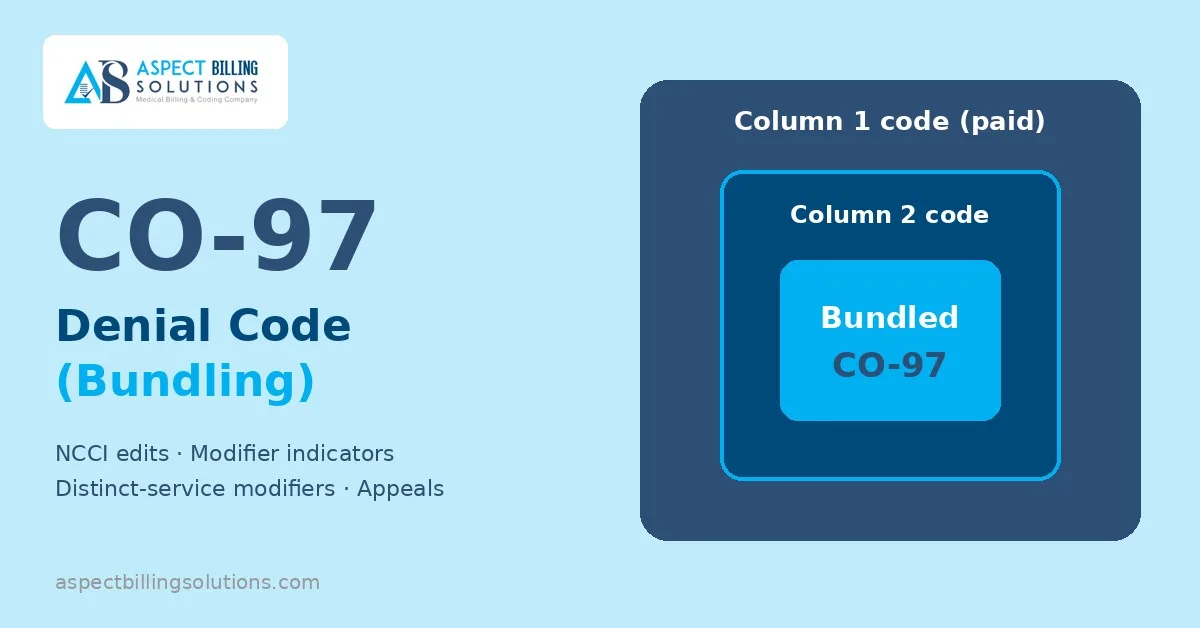
CO-97 Denial Code (Bundling): NCCI Edits and Fixes
CO-97 means the payer considers a service included in the payment for another service already adjudicated. It usually comes from NCCI bundling edits or the global surgical package. The provider cannot bill the patient, and keeping CO-97 under 10% of denials is an illustrative practical target, not a mandate. Bundling denials frustrate billing teams because […]
Read more