
Category: Insurance Credentialing
LCSW Credentialing With Insurance: A Step-by-Step Guide
LCSW credentialing is how insurers confirm a licensed clinical social worker’s degree, license and supervised experience before adding them to a network. Finish your clinical licensure first, set up your NPI and CAQH profile, then apply to each payer and to Medicare separately. This guide covers the requirements, the steps, the Medicare rules for clinical […]
Read more
How Psychiatrist Credentialing With Insurance Works
Psychiatrist credentialing is the process insurers use to confirm a psychiatrist’s license, training and DEA registration before adding them to a network. Plan for several months, and plan to bill only after you hold a written effective date. This guide covers the documents you need, the CAQH profile, Medicare enrollment and the tracking habits that […]
Read more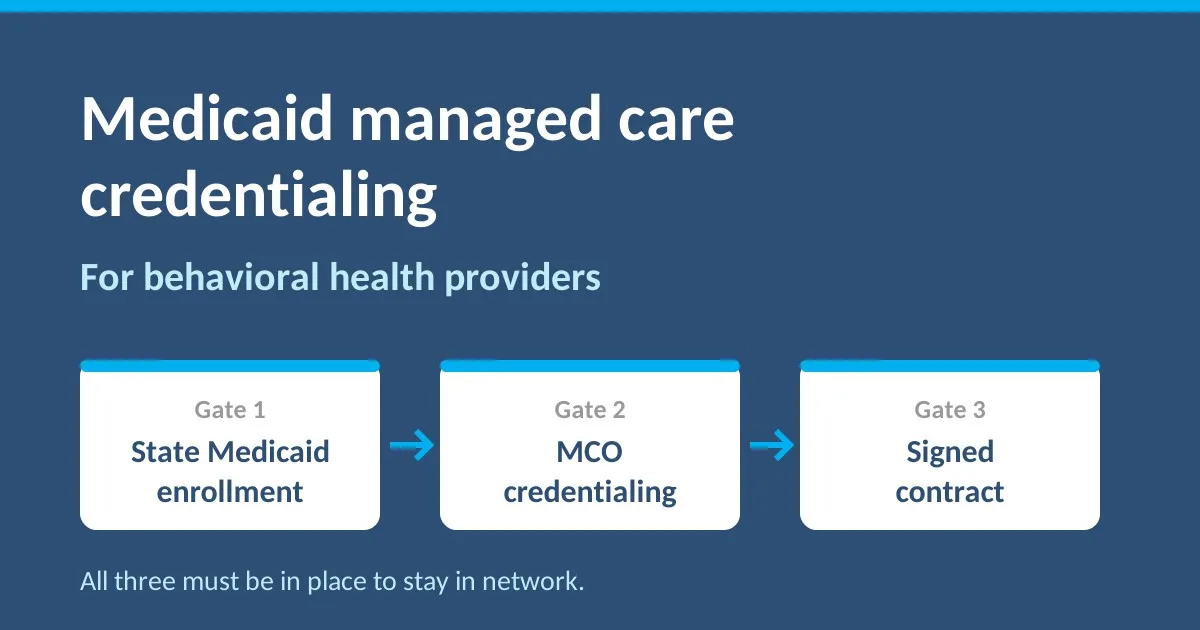
Getting In Network: Medicaid Managed Care Credentialing Guide
Medicaid managed care credentialing is the process that lets a therapist or behavioral health group see a Medicaid plan’s members in network and get paid by that plan. It usually takes three things: enrollment with the state Medicaid program, credentialing with each managed care organization (MCO), and a signed contract with an effective date. This […]
Read more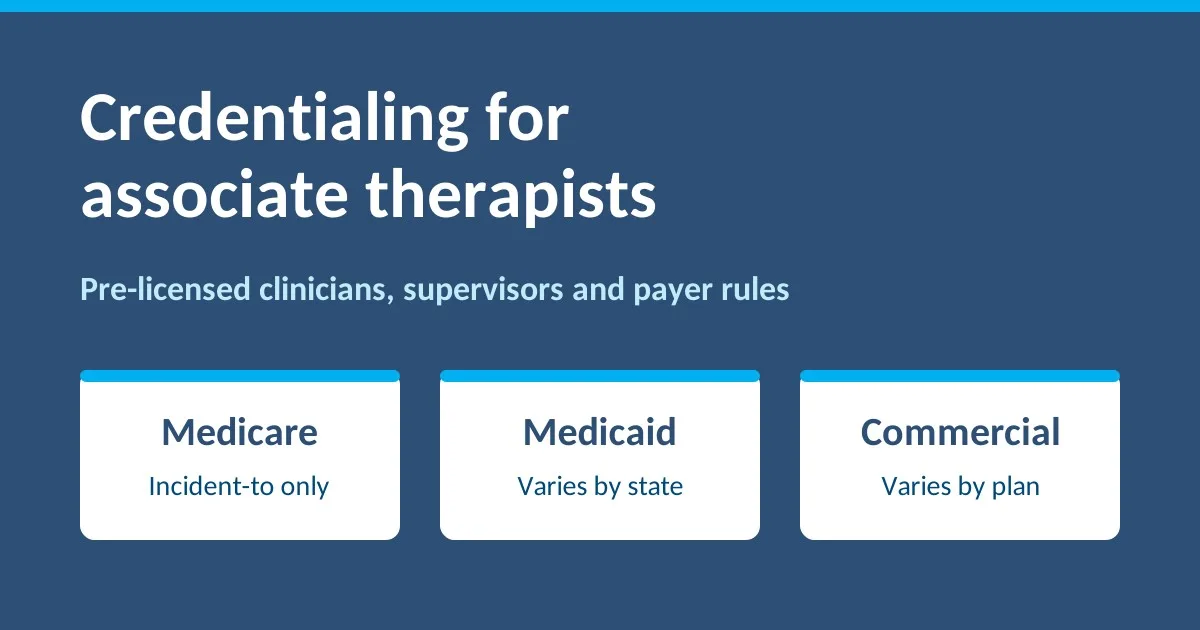
Associate Therapist Credentialing and Supervised Billing Rules
Associate therapist credentialing is limited because most payers credential only independently licensed clinicians. An associate, intern or pre-licensed therapist can sometimes be paid through a supervisor or a state Medicaid program, but the rules differ for every payer. This guide covers how Medicare, Medicaid and commercial plans treat associates, what supervised billing requires, the compliance […]
Read more
TRICARE Credentialing: A Step-by-Step Guide for Therapists
TRICARE credentialing lets a therapist or behavioral health group treat military families and get paid by the military health program. You first become a TRICARE-authorized provider through the regional contractor for your state, then choose whether to join that contractor’s network. This guide explains which behavioral health providers TRICARE pays, the counselor rules that trip […]
Read more
LMFT Credentialing for Medicare, Medicaid and Commercial Plans
LMFT credentialing is the process of getting a licensed marriage and family therapist approved by Medicare, Medicaid and commercial health plans so claims pay at in-network rates. Since January 1, 2024, marriage and family therapists (MFTs) can enroll in Medicare and bill it directly, which added a new track to every LMFT’s file. This guide […]
Read more
PMHNP Credentialing for Psychiatric Nurse Practitioners
PMHNP credentialing gets a psychiatric mental health nurse practitioner approved to bill Medicare, Medicaid and commercial plans under their own NPI. It covers more ground than therapist credentialing, because payers also check prescribing authority and DEA registration. This guide covers the credential stack, Medicare’s NP rules, the own-NPI versus incident-to choice, a step-by-step workflow, payer […]
Read more
Psychologist Credentialing for Medicare and Insurance Panels
Psychologist credentialing is the work of getting a licensed psychologist approved by Medicare, Medicaid and commercial plans so sessions and testing pay in network. For Medicare, the key choice is enrolling as a clinical psychologist, which comes with a physician consultation rule most other therapists do not face. This guide covers the two Medicare designations, […]
Read more
LPC Credentialing: A Counselor’s Path to Insurance Panels
LPC credentialing is how a licensed professional counselor gets approved to bill insurers and Medicare. You need an active state license, an NPI, a complete CAQH profile and a separate application for each payer. Since 2024, Medicare also enrolls mental health counselors directly. This guide explains the Medicare rules, the group practice steps and the […]
Read more
Texas Insurance Credentialing for Eye Care Clinics
Eye Care Clinic Insurance Credentialing Texas-In the ever-evolving landscape of healthcare in Texas, eye care clinics face unique challenges when it comes to insurance credentialing. This process is critical for ensuring that optometrists, ophthalmologists, and other eye care professionals can provide services covered by insurance plans, allowing patients to access affordable vision care. Texas, with […]
Read more