
Affordable Internal Medicine Billing Solutions in New Mexico
Affordable internal medicine billing solutions in New Mexico use transparent, percentage-based pricing that scales with collections instead of fixed in-house salaries, software, and turnover costs. A genuinely affordable partner combines HIPAA-compliant medical billing, accurate ICD-10 coding and CPT codes, and one dedicated billing agent per practice, so internists pay only for results rather than absorbing the fixed overhead of running billing in-house.
Running an internal medicine practice in New Mexico, affordable internal medicine billing solutions in New Mexico already means operating on thinner margins than most specialties. Chronic-condition patients require detailed documentation and multiple diagnosis codes per visit, and a heavy Medicaid and Medicare payer mix means every claim reimburses at a lower rate than commercial insurance. Add the cost of hiring, training, and retaining in-house billing staff, and many internists find that billing overhead quietly eats into the margin they need to keep the practice open. Affordability in medical billing is not about finding the cheapest possible vendor; it is about paying only for the revenue that actually gets collected.
This guide explains what affordable really means in internal medicine billing, why New Mexico’s physician shortage and payer mix make cost efficiency especially important, and how the numbers compare between in-house and outsourced billing. It also shows how Aspect Billing Solutions structures transparent, percentage-based pricing around one dedicated agent per New Mexico practice, so cost stays predictable as the practice grows.
Why Affordability Matters More for New Mexico Internal Medicine Practices?
New Mexico has 32 of its 33 counties designated as health professional shortage areas, and the state is projected to be short more than 2,100 doctors, including 326 primary care providers. New Mexico also has the oldest physician workforce in the nation, with roughly a third of physicians age 60 or older. Internists who remain are absorbing larger patient panels with thinner administrative support, which makes every dollar spent on billing overhead matter more than it would in a well-staffed urban market.
New Mexico’s Physician Shortage and Thin Practice Margins
When a solo internist or small group is already stretched covering patient demand across a shortage area, hiring, training, and retaining dedicated in-house billing staff becomes a significant distraction and expense. A national report on billing costs found practices spending as much as 14% of total collections on in-house billing once errors and inefficiency are counted, well above what a specialized outsourced partner typically charges.
A Medicaid-Heavy Payer Mix Changes the Math
New Mexico practices tend to see a larger share of Medicaid and Medicare patients than the national average, and both programs reimburse at lower rates than commercial insurance. When reimbursement per visit is already compressed, a billing overhead cost that scales with collections, rather than a fixed in-house salary regardless of revenue, protects margin far more reliably.
What “Affordable” Really Means in Medical Billing?
Affordable billing is not the lowest sticker price; it is the lowest total cost once accuracy, denials, and staffing risk are factored in. A partner that charges slightly more per claim but collects a meaningfully higher percentage of billed revenue is the more affordable choice in practice.
Percentage-Based Pricing vs. Flat Fee Models
Outsourced medical billing typically costs 4% to 10% of collections, with most practices paying between 5% and 7%. Because this fee scales directly with what the practice actually collects, a slow month costs less and a strong month costs proportionally more, unlike a flat in-house salary that stays fixed no matter how collections move.
No Hidden Costs: Software, Training, Turnover
In-house billing carries costs beyond salary: clearinghouse and software fees, ongoing coding certification and training, and the cost of covering a role during turnover, which the billing industry estimates at 25% to 40% annually. A billing partner that already employs certified coders absorbs all of these costs inside its standard fee.
In-House vs. Outsourced Cost Comparison
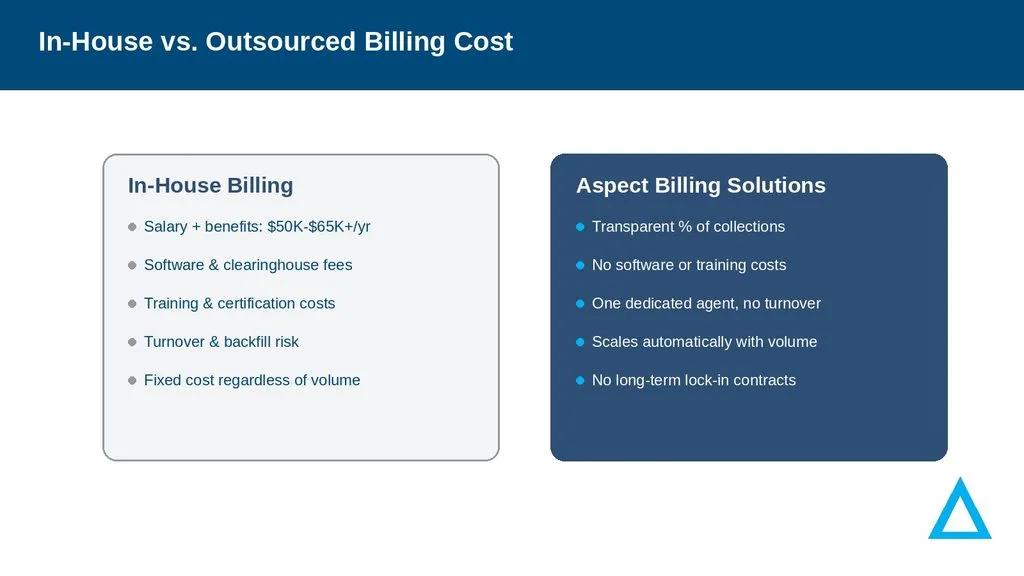
The Bureau of Labor Statistics puts the median salary for medical billing and coding specialists near $50,250 a year, with experienced staff earning $80,950 or more. Once payroll taxes, benefits, software, and training are added, the fully loaded cost of a single in-house biller regularly exceeds $65,000 annually, before accounting for any denied or underpaid claims their workload does not have time to appeal.
Typical Cost Factors Practices Should Compare
- Loaded biller salary: $50,250–$80,950+/year per staff member (BLS, 2024)
- Billing software and clearinghouse fees: $2,000–$5,000+/year
- Ongoing coding certification and training: $1,000–$3,000/year
- Turnover and backfill risk: 25–40% annual turnover in billing roles industry-wide
- Outsourced billing fee: typically 4–10% of collections, most practices pay 5–7%
Core Services That Keep Internal Medicine Billing Affordable
Affordability depends on more than the fee structure; it depends on how few dollars leak out through denials, delays, and coding errors along the way.
Accurate Coding to Prevent Costly Denials
Every denied claim costs money twice, once in delayed reimbursement and again in staff time spent reworking it. Certified coders trained specifically in internal medicine apply ICD-10 coding, CPT codes, and HCPCS codes correctly on the first submission, which is the single biggest lever for keeping the effective cost of billing low.
Eligibility Verification & Prior Authorization
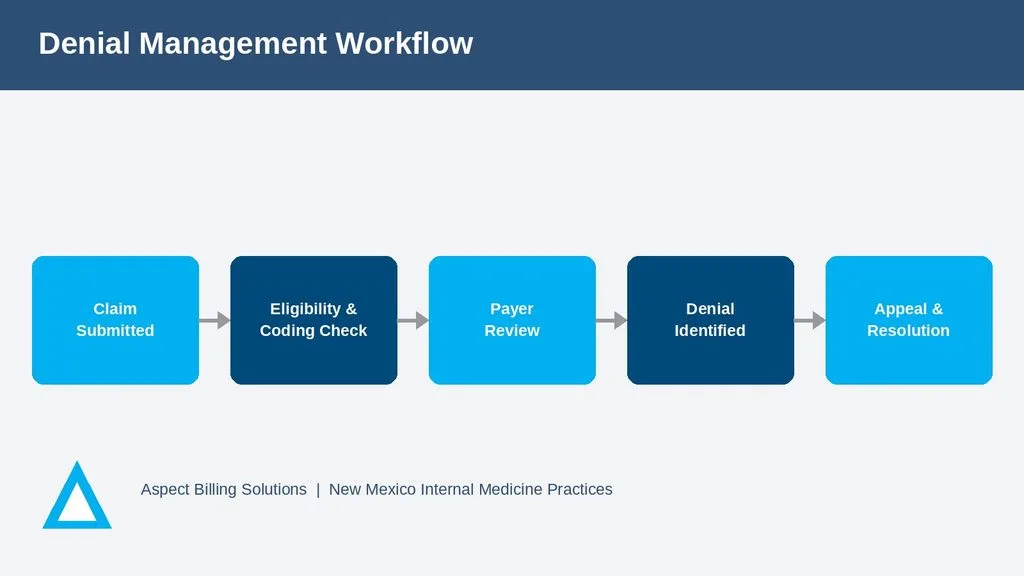
Eligibility verification before every visit prevents the most common and most expensive category of denials: claims submitted against coverage that had already lapsed or changed. Prior authorization support for diagnostic tests and specialist referrals prevents a similar category of avoidable denials specific to internal medicine.
Denial Management & Appeals
A structured claim denial management process resolves denials quickly instead of letting them age past timely filing deadlines, which is where denied revenue becomes permanently lost revenue. Fast, consistent appeal turnaround protects the practice’s effective collection rate, which matters more to total cost than the billing fee percentage alone.
Credentialing Without Added Overhead
Provider credentialing delays of 60 to 120 days can leave a new internist unable to bill at all, which is one of the most expensive gaps a practice can face. Folding credentialing into the same affordable billing relationship, rather than paying a separate vendor for it, keeps this cost predictable instead of an unplanned add-on expense.
Aspect Billing Solutions’ range of medical billing services covers credentialing, coding, and denial management together under one transparent fee structure.
Benchmarking Affordable Billing Performance
A low fee percentage means little if collections and denial rates are poor. New Mexico internists comparing billing partners should weigh cost against these performance benchmarks together.
| Metric | Industry Average | Top-Performing Practices | Aspect Billing Solutions Target |
| Billing Cost (% of Collections) | 8–14% | 5–7% | 4–6% |
| Clean Claim Rate | 85–90% | 95%+ | 96%+ |
| First-Pass Denial Rate | 10–12% | Under 5% | Under 4% |
| Days in A/R | 40–50 days | Under 35 days | 30–32 days |
| Net Collection Ratio | 92–95% | 96–97% | 97%+ |
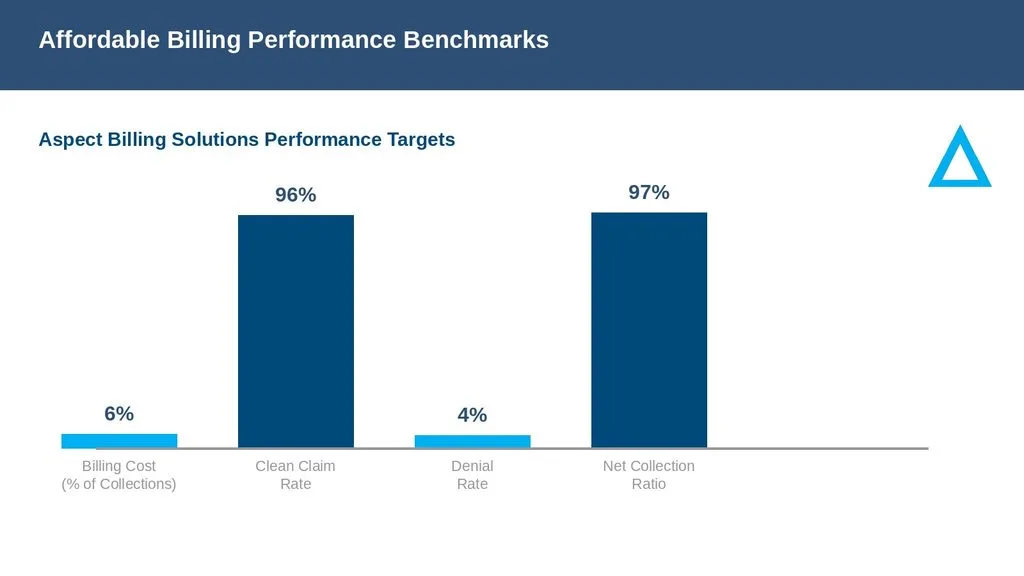
Affordable billing performance targets Aspect Billing Solutions tracks for New Mexico internal medicine clients.
These denial-rate figures align with data published by the Medical Group Management Association, which tracks first-pass denial rates and revenue cycle performance across thousands of U.S. medical groups.
How Aspect Billing Solutions Delivers Affordable Billing in New Mexico?
Aspect Billing Solutions charges a single transparent percentage of collections that covers eligibility verification, ICD-10 and CPT coding, claims submission, denial appeals, A/R recovery, and provider credentialing under one HIPAA-compliant workflow. Every New Mexico practice is assigned one dedicated agent instead of a rotating call center, keeping service quality high without adding a separate line-item cost for account management.
New Mexico practices already familiar with Aspect Billing Solutions’ family practice billing solutions in New Mexico can extend the same transparent pricing model to internal medicine providers, and practices comparing regional pricing can also review this affordable internal medicine billing solutions overview for Texas for a sense of how the same model applies across state lines.
Quick Summary
- 32 of New Mexico’s 33 counties are health professional shortage areas, straining thin practice margins further.
- Outsourced billing typically costs 4-10% of collections, most practices pay 5-7%, versus $50,250-$80,950+ per in-house biller.
- Affordable billing means lowest total cost after denials and errors, not simply the lowest quoted fee.
- Accurate ICD-10, CPT, and HCPCS coding on first submission is the biggest lever for controlling the true cost of billing.
- Folding credentialing into the same billing relationship avoids an unplanned, separately priced add-on cost.
- Track billing cost as a percentage of collections alongside clean claim rate, denial rate, and net collection ratio.
Final Considerations
Affordability in medical billing is ultimately a math problem, not a marketing claim. For New Mexico internists working in a state with a severe physician shortage and a payer mix weighted toward lower-reimbursing government plans, every percentage point of billing cost and every avoidable denial has an outsized effect on take-home revenue. The practices that control cost most effectively are the ones that measure total cost of billing, not just the quoted fee.
The most affordable internal medicine billing solution in New Mexico is the one that combines transparent. Percentage-based pricing with high coding accuracy and fast denial resolution. So the practice keeps more of what it bills rather than simply paying less for the billing itself. Aspect Billing Solutions was built around that combination for internal medicine practices across New Mexico and beyond.
If your practice is unsure whether its current billing cost. Whether in-house or outsourced, is actually the most affordable option available. A side-by-side comparison against the benchmarks above is a useful starting point before making any change.
Frequently Asked Questions
What does affordable internal medicine billing actually mean?
It means the lowest total cost of billing once accuracy and denial rates. These are factor in, not simply the lowest quote percentage fee. A slightly higher fee from a partner with strong coding accuracy. Often costs less overall than a cheaper vendor with a high denial rate.
How much does outsourced internal medicine billing typically cost?
Most outsourced billing companies charge 4% to 10% of collections, with the majority of practices paying between 5% and 7%. The exact rate depends on claim volume, services included, and specialty complexity.
Is outsourced billing cheaper than hiring in-house staff?
For most practices collecting under a few million dollars a year, outsource billing is typically cheaper once load salary, software, training, and turnover costs are count. The Bureau of Labor Statistics puts the median billing specialist salary near $50,250 a year before any of those additional costs.
Does New Mexico’s physician shortage affect billing costs?
Indirectly, yes. With 32 of 33 counties designated as shortage areas, internists often carry larger patient panels with less administrative support, making efficient, low-overhead billing more important to protect thin margins.
Can a solo internal medicine practice in New Mexico afford professional billing support?
Yes, percentage-base pricing scales down naturally for smaller practices, since the fee is tie to actual collections rather than a fix salary. Solo practices often see the largest relative savings compared with hiring a dedicated in-house biller.
Does Aspect Billing Solutions charge extra for credentialing or denial management?
No, credentialing, denial management, and eligibility verification are include under Aspect Billing Solutions’ standard percentage-base fee. This avoids the unplanned add-on costs that some billing companies charge separately.
Major Industry Leader
Aspect Billing Solutions provides affordable, HIPAA-compliant medical billing and coding for internal medicine practices across New Mexico, backed by certified coders and one dedicated agent per account with no hidden fees. Request a free consultation and revenue cycle audit to see exactly how your current billing cost compares with these benchmarks, at www.aspectbillingsolutions.com.